If My Line Set Run Is Long, Is Zone Air’s 75 ft Option a Big Deal?
It can be a big deal—but only if your planned installation actually needs the extra reach and the specific mini-split model is approved for it. A 75 ft line set can make it easier to place an outdoor unit where it belongs instead of forcing it beside a bedroom window, under a deck, or in a spot with poor airflow. But “75 ft option” is not a universal promise that every system can use 75 ft of tubing without adjustments.
When comparing Zone Air with MRCOOL, focus on the full installation, not just the longest line set listed on a product page. Check the model’s maximum piping length, elevation limits, tubing requirements, refrigerant-charge rules, electrical needs, and warranty terms. Those details determine whether a longer run is genuinely useful—or just another specification that looks good in an ad.
What “DIY mini split” means in 2026
In 2026, a DIY mini split generally means a ductless heat-pump system designed hyper heat mini split review to reduce the amount of specialized installation work a homeowner must hire out. Some systems use precharged, quick-connect line sets that are intended to simplify refrigerant connections. Other systems still require a licensed HVAC professional to flare, evacuate, pressure-test, and charge the refrigerant circuit.
“DIY” does not mean every part of the job is simple or that local rules disappear. You may still need a permit, a properly sized electrical circuit, a disconnect, and a safe mounting location. Electrical requirements depend on the unit’s nameplate and local code; do not assume a standard household outlet is suitable. Refrigerant-handling rules and warranty conditions can also vary by product and jurisdiction.
The practical distinction is this: a DIY-labeled product may make some refrigerant connections more homeowner-accessible, but the project still involves electrical work, wall penetrations, condensate drainage, weatherproofing, and careful setup. If you are uncertain about the circuit or refrigerant connections, bring in a qualified installer for that portion.
Why a 75 ft line set can matter
A line set carries refrigerant between the indoor head and the outdoor unit. The greater the distance, the more planning the installation needs. A 75 ft option can be valuable when the indoor unit is in a bedroom or finished living space and the outdoor unit needs to be farther away for noise, access, property-line, or visual reasons.
For example, a garage conversion may put the indoor head on the far wall while the outdoor unit needs to sit around a corner on a concrete pad. A longer approved line set could let you route the tubing neatly along the exterior rather than placing the condenser in a narrow side yard or directly outside a sleeping area.
It can also help avoid a difficult compromise: choosing an inconvenient indoor-head location simply because the standard line set is too short. That said, extra length is not automatically better. The tubing may need to follow a planned route with appropriate protection, slope, and support. Excess line should not be casually stuffed behind the condenser or tightly coiled; follow the manufacturer’s instructions for routing and any permitted coil arrangement.
Zone Air vs. MRCOOL: the value tradeoff
Zone Air’s 75 ft option may be a meaningful advantage if the particular system you are considering supports that length and your measured route is close to the limits of a shorter kit. The value is not simply “more feet.” It is the possibility of putting the equipment where it works best without adding an incompatible extension or changing the layout.
MRCOOL is well known for DIY-oriented mini-split products, including models that use manufacturer-specific line-set connection systems. The actual included length and maximum permitted run depend on the model and generation. Do not assume one MRCOOL system’s limits apply to another, or that its line set can be extended with generic fittings. Check the manual for the exact model number before comparing it with Zone Air.
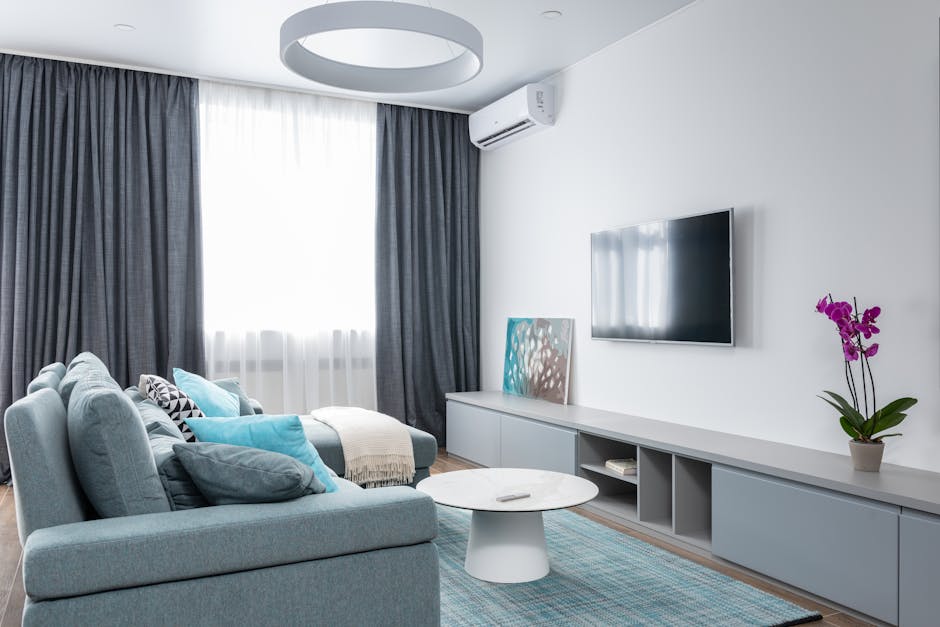
Cooper&Hunter is another brand shoppers may encounter in this category. As with Zone Air and MRCOOL, compare the specifications for the specific indoor and outdoor units rather than relying on a brand-level summary. A longer line set is only an advantage if it is approved for that equipment and does not trigger installation requirements or costs that outweigh the convenience.

Measure the route—not the straight-line distance
Before buying a 75 ft line set mini split, measure the likely tubing route from the indoor unit to the outdoor unit. A tape measure stretched through open air gives you a rough starting point, not a finished measurement. Account for the path up or down the wall, around corners, through the wall sleeve, and to the service connections.
- Choose the indoor-head location. Consider airflow, mounting clearance, and whether the unit will blow directly toward a bed or seating area.
- Choose a practical outdoor-unit location. Check service access, manufacturer clearances, drainage, snow exposure, and noise near windows or neighbors.
- Sketch the line-set path. Include vertical sections, turns, and the route to the outdoor unit—not just the distance between the two units.
- Compare the measured route with the manual. Confirm total permitted length, vertical separation, minimum length, tubing size, and whether extra refrigerant is required.
- Ask who handles the work that remains. If the line set needs cutting, brazing, evacuation, or charging, confirm whether a qualified technician is required and how that affects the warranty.
That last step is important for a custom length line set. Custom tubing can solve a routing problem, but it may also mean the installer must make refrigerant connections and verify the system with professional tools. A factory quick-connect kit and a field-fabricated line set are not necessarily interchangeable options.
SEER2 efficiency and the operating-cost logic
SEER2 is a standardized seasonal cooling-efficiency rating. A higher SEER2 rating can mean less electricity used for a given amount of cooling under the rating test conditions, but it does not tell you the exact bill for your home. Heating efficiency is assessed with separate metrics, and real-world costs depend on climate, insulation, thermostat settings, electricity prices, equipment sizing, and how well the installation is done.
To make a basic cooling-cost comparison, estimate annual cooling use in kilowatt-hours and multiply by your electricity rate. If you have comparable systems and operating assumptions, a higher SEER2 rating can help estimate which one may use less energy. But avoid treating a small rating difference as a guaranteed dollar saving: actual run hours and installation quality may matter more than the difference between two nearby ratings.
A long run does not automatically erase a system’s efficiency advantage. However, piping limits, incorrect refrigerant charge, poor insulation on the lines, or a compromised installation can undermine performance. The system must be configured according to its manual. If a 75 ft route requires additional refrigerant or professional commissioning, include those costs in the value comparison.
For a garage, think about how often you need cooling or heat and whether the space is insulated. A high-SEER2 unit may be attractive if it will run frequently, but a poorly insulated garage can lose conditioned air quickly. For a bedroom, quiet placement and comfortable airflow may be more important day to day than a small difference in the published efficiency rating.
Cold-climate performance and “Hyper Heat”
Cold-weather heating claims deserve their own check. Some products use phrases such as “Hyper Heat,” but buyers should not treat the phrase as a universal performance standard or assume it guarantees full heating capacity at a particular outdoor temperature. Look for the manufacturer’s published heating-capacity tables and minimum operating temperatures for the exact model.
Ask what heating capacity remains at the outdoor temperatures common in your area. A unit that can continue operating at a low temperature may still deliver less heat than it does in mild weather. You also need to know whether supplemental heat is required, how defrost cycles affect comfort, and whether the unit is approved for the proposed line length and elevation in heating mode.
That matters in a bedroom or garage that needs dependable heat through a cold snap. Compare capacity at design temperatures—not just the warm-weather nominal rating—and consult a qualified HVAC professional if the space is a primary heat source. A long line run is a separate question from cold-climate capacity, but both affect whether the installation suits the room.
Reviews, controls, and the details people overlook
Customer reviews can help identify recurring experiences with ordering, documentation, or support, but they are not a substitute for the installation manual. If you are checking Trustpilot for mrcool.com reviews, look for patterns across recent posts and distinguish shipping or customer-service complaints from verified system-performance issues. A review rarely confirms that a particular line length is approved for your model.
Likewise, smart-home control should be verified before purchase. If you want to use Google Assistant, check whether the exact model supports it directly, needs a compatible Wi-Fi module, or requires a third-party controller. Compatibility can vary by product generation and app ecosystem, so do not assume that a brand’s other models have the same integrations.
So, is Zone Air’s 75 ft option a big deal?
Yes, if your real, measured route needs more reach than the standard kit provides and the exact Zone Air model is rated for that run. It may be especially useful when the outdoor unit needs to sit farther from a bedroom, a garage installation has an awkward exterior route, or you want to avoid a poor equipment location.
It is less compelling if your route is comfortably within the included length, if the model’s manual imposes a shorter maximum, or if the longer option requires extra work that makes another system a better overall fit. MRCOOL may offer stronger value for a shopper who prioritizes a familiar DIY-style connection system and whose layout fits the model’s approved piping limits. Zone Air may be the better value when the longer approved line set solves a real placement problem. Cooper&Hunter belongs in the comparison if its specific model, support, and line-set rules better suit your room and budget.
Use this quick decision checklist
- Measure the complete route and confirm it fits the exact model’s maximum line length.
- Check vertical separation, tubing diameter, included length, and refrigerant-charge requirements.
- Confirm whether the 75 ft option is a factory-approved kit or a custom installation.
- Price the electrical work, mounting, line-cover materials, and any technician commissioning.
- Compare SEER2 and heating-capacity data for the temperatures your home actually sees.
- Review warranty conditions and verify Google Assistant compatibility if smart control matters.
The bottom line: 75 ft is valuable when it gives you a cleaner, quieter, code-conscious installation without pushing the system beyond its published limits. Treat the number as a planning feature—not proof that every long run is easy, efficient, or covered by warranty.